


When we think about improving our health, we often focus on the things we can measure – our weight, blood pressure, cholesterol levels, exercise habits or sleep. These are all important of course, but another powerful influence on our wellbeing can’t be measured with a blood test or a set of scales: it’s our connection with others.
As someone who carries out workplace health checks, I’ve noticed that conversations often go beyond physical health. People talk about how they are feeling, whether they feel supported, and whether they feel connected to the people around them.
It is a reminder that wellbeing is not just about looking after our bodies; it is also about nurturing our relationships.
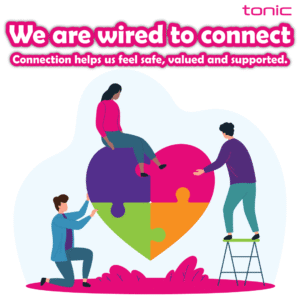
We are wired to connect
Humans are social beings. Connection helps us feel safe, valued and supported. Positive social relationships have been shown to reduce stress, improve mental wellbeing and are associated with better physical health and a longer life. The Harvard Study of Adult Development, one of the longest-running studies of adult life, has found that strong relationships are one of the strongest predictors of health and happiness over time.
Social connection is not simply a “nice to have”; it plays an important role in our overall health. Research has linked loneliness and poor social relationships with increased risks to physical and mental health, including heart disease, stroke and earlier mortality.
One of the challenges is that loneliness isn’t always obvious. Someone can be surrounded by colleagues, family or friends and still feel disconnected. It is not just about the number of people around us; it is about whether we feel understood, valued and that we belong.
Everyday interactions shape workplace culture
We often think social connection is built through big events such as team-building days or workplace celebrations. While these have their place, the culture of an organisation is shaped far more by the everyday interactions that happen between them.
The way we greet each other in the morning, respond to a colleague who is having a difficult day, or make time to listen without rushing all contribute to whether people feel respected, valued and included.
These seemingly small interactions create a ripple effect. When people feel psychologically safe and genuinely connected, they are more likely to collaborate, share ideas, support one another and ask for help when they need it. Over time, these everyday behaviours become the foundation of a healthier, happier workplace.
Emotional intelligence helps us connect
Being surrounded by people doesn’t automatically create connection. Strong relationships are built through empathy, trust, self-awareness and good communication.
This is where emotional intelligence plays an important role. Being able to recognise our own emotions, understand others and respond thoughtfully helps us create stronger relationships. Research has found links between emotional intelligence, employee wellbeing and positive workplace experiences.
Sometimes the most supportive thing we can do is not to provide solutions, but simply to listen. Feeling heard can make a significant difference.
Connection supports healthier habits
Social connection can also influence the choices we make every day.
We are often more motivated when we have support around us – whether that is a colleague encouraging us to go for a walk, a friend joining us for exercise, or a team that values healthy habits.
Connection can also provide a protective factor during challenging times. Knowing that someone cares, notices and is there to listen can help us cope with stress and uncertainty.
Whether it’s joining a lunchtime walking group, encouraging one another to take regular breaks, or simply sharing healthy ideas, positive relationships can make healthy behaviours easier to maintain.
Creating a more connected workplace
The good news is that strengthening social connection doesn’t require a large budget or a formal wellbeing programme. Every individual can make a difference through simple, intentional actions.
Here are five ideas to try this week:
- Be fully present. When someone is speaking, put distractions aside and give them your full attention.
- Show appreciation. A sincere thank you or recognising someone’s contribution can have a lasting positive impact.
- Include others. Invite a colleague to join you for lunch, a coffee or a walk, particularly someone who may be new or quieter than others.
- Check in regularly. If someone seems withdrawn or not quite themselves, take a few moments to ask how they are and listen without judgement.
- Celebrate progress. Acknowledging small achievements helps people feel valued and reinforces a positive team culture.
- Harvard Study of Adult Development. Harvard University. adultdevelopmentstudy.org
- Holt-Lunstad, J., Smith, T. B., Baker, M., Harris, T., & Stephenson, D. (2015). Loneliness and Social Isolation as Risk Factors for Mortality: A Meta-Analytic Review. Perspectives on Psychological Science, 10(2), 227–237.
- Karimi, L., et al. (2021). Emotional intelligence: predictor of employees’ wellbeing, quality of care and psychological empowerment. BMC Psychology, 9, 126.
- U.S. Surgeon General. (2023). Our Epidemic of Loneliness and Isolation: The Healing Effects of Social Connection and Community.
- Valtorta, N. K., et al. (2016). Loneliness and social isolation as risk factors for coronary heart disease and stroke. Heart, 102(13), 1009–1016.
These actions may seem simple, but when practised consistently they help create an environment where people feel connected, supported and able to thrive.
A final thought
Whether we are at work, at home or in our communities, we all have a fundamental need to feel that we belong.
Social connection is one of the foundations of wellbeing. It influences how we feel, how we cope and how we thrive.
The good news is that connection does not require huge amounts of time or effort. Often, it begins with something very simple: a conversation, a smile, a question or a moment of kindness.
So, as you think about your own wellbeing this week, ask yourself:
Who could benefit from a small moment of connection today?
For more on social connection, log in to Tonic And Me and explore August’s topic.
If you are not yet a subscriber, GET IN TOUCH to find out how Tonic can support you, your team or your organisation to build sustainable wellbeing from the inside out, one small, practical habit at a time.


