


“When we talk about wellbeing, we often focus on what we add in – better nutrition, more movement, improved sleep”, says Becca – founder of Tonic Wellbeing. But there’s another side to the equation that’s just as important: what we’re exposed to every single day. From the products we put on our skin, to the containers we store our food in, to the air we breathe at home, these small, often unnoticed exposures can quietly influence how our body functions, particularly our hormones. For women especially, where hormonal balance underpins everything from energy and mood to fertility and long-term health, this matters.
In this blog, our good friend, Helen James, a Nutritional Therapist explores endocrine-disrupting chemicals (EDCs) – what they are, where they’re commonly found, and most importantly, the simple, practical steps you can take to reduce your exposure.
We hope you find this insightful.
Endocrine-disrupting chemicals (EDCs)
EDCs are substances that can interfere with the body’s hormone system. Because hormones regulate everything from metabolism to reproduction, even small disruptions can have wide effects. Many everyday products—cleaning supplies, plastics, cosmetics—can contain EDCs such as phthalates, parabens, and bisphenols.
This is particularly important for women because the female body relies on a finely balanced hormonal system to regulate the menstrual cycle, fertility, pregnancy, and menopause. Exposure to EDCs has been linked to issues like irregular periods, reduced fertility, thyroid dysfunction, and conditions such as endometriosis and polycystic ovary syndrome (PCOS). There is also concern about increased risk of hormone-sensitive cancers, including breast cancer.
Reducing exposure to these chemicals helps support hormonal balance, reproductive health, and long-term wellbeing. While it’s impossible to avoid all environmental toxins, choosing cleaner household products, personal care items, and food storage options can significantly lower overall exposure and contribute to better health outcomes over time.
Oestrogen mimicry is one of the main ways endocrine-disrupting chemicals (EDCs) interfere with the body.
Normally, the hormone oestrogen binds to specific receptors in cells—like a key fitting into a lock—to regulate processes such as the menstrual cycle, fertility, bone health, and mood. The body tightly controls how much oestrogen is present and when it acts.
EDCs that mimic oestrogen (“xenoestrogens”) have a similar enough shape to fit into those same receptors. This creates a problem:
They can disrupt timing, turning signals on or off at the wrong moment
They can activate the receptor when they shouldn’t, effectively “tricking” the body into thinking more oestrogen is present
They may block natural oestrogen, preventing normal hormonal signalling.
Hormones work in very precise balances. When EDCs mimic oestrogen, they can lead to:
- Hormonal imbalance (too much or poorly timed oestrogen signalling)
- Menstrual irregularities
- Fertility issues
- Worsening of oestrogen-sensitive conditions (like endometriosis or fibroids)
- Increased risk of hormone-related cancers (e.g. breast cancer)
Common oestrogen-mimicking EDCs:
- Bisphenol A (BPA) – found in plastics and food linings
- Phthalates – often in fragrances and personal care products
- Parabens – used as preservatives in cosmetics
- Some pesticides and industrial chemicals
1. Personal care products (BIGGEST daily exposure)
Where they are:
- Shampoo, conditioner, shower gel
- Moisturiser, sunscreen
- Makeup, perfume, deodorant
Common chemicals:
- Phthalates (often hidden under “fragrance”)
- Parabens (preservatives)
- UV filters in sunscreens
These are directly absorbed through skin, which is a major exposure route
✅ Choose fragrance-free where possible
✅ Avoid “parfum” unless brand is transparent
✅ Look for “paraben-free” and “phthalate-free”
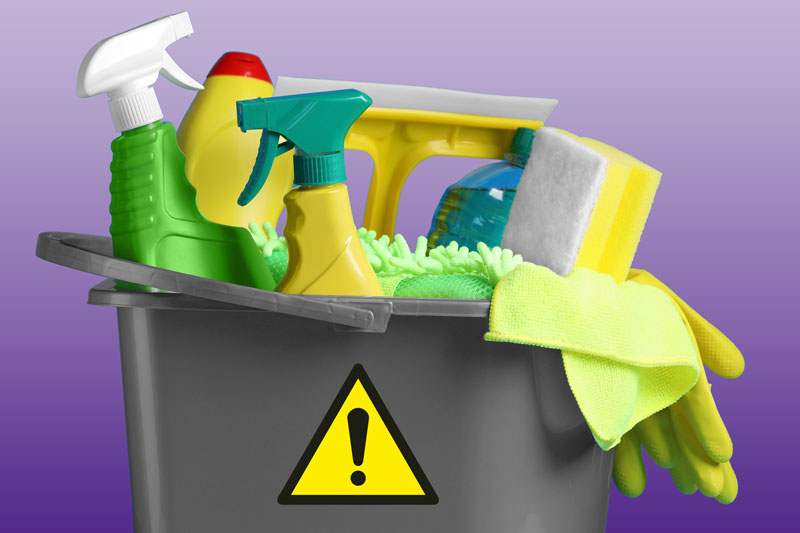
2. Cleaning products + air fresheners
Where they are:
- Multi-surface sprays
- Laundry detergent
- Fabric softener
- Air fresheners / candles
Why they matter:
- Fragrance chemicals can contain phthalates
- You inhale them + absorb via skin
✅ Switch to unscented or essential oil-based cleaners
✅ Avoid plug-ins and synthetic air fresheners
3. Food packaging + plastics
Where they are:
- Plastic containers
- Cling film
- Takeaway packaging
- Canned food linings
Key chemicals:
- Bisphenol A (BPA) – mimics oestrogen
- BPA can leach into food, especially when heated. It’s linked to hormone imbalance and fertility issues
✅ Use glass or stainless steel containers
✅ Avoid heating food in plastic
✅ Reduce canned food where possible
⚠️ Some manufacturers have swapped to BPA free can lining so check the labels
4. Household items (hidden exposure)
Where they are:
- Sofas, mattresses (flame retardants)
- Carpets, electronics
- Dust in the home
Chemicals:
- Flame retardants (PBDEs)
- Industrial chemicals that accumulate in dust
- Household dust can contain EDCs from furniture and materials
✅ Vacuum regularly (HEPA filter if possible)
✅ Ventilate rooms daily
✅ Wash hands before eating
5. Cookware + food contact materials
Where they are:
- Non-stick pans
- Greaseproof paper
- Fast food packaging
Chemicals:
- PFAS (“forever chemicals”)
✅ Use stainless steel, cast iron, or ceramic
✅ Limit heavily packaged/processed foods
If you only do 3 things, do these…
1. Switch to fragrance-free toiletries
2. Stop heating food in plastic
3. Replace air fresheners with nothing or natural alternatives
That alone cuts a large portion of exposure.
Summary
Chemicals and toxins are all around us and at times are difficult to avoid. However, you do have total control over the foods you eat, the products you put on your skin and what you use to clean your house. Avoid harmful endocrine disrupting chemicals and xenoestrogens by eating more organic, plant-based foods, drinking filtered water and using homemade skincare and cleaning products such as vinegar and water. Start reading the ingredient labels on food packaging and cosmetics, and steer clear of dairy, plastics and non-stick cookware.
REFERENCES
- Endocrine Society (2015, updated). Endocrine-disrupting chemicals (EDCs). Available at: https://www.endocrine.org/patient-engagement/endocrine-library/edcs.
- EDC-2: The Endocrine Society’s Second Scientific Statement on Endocrine-Disrupting Chemicals.Endocrine Reviews, 36(6), pp. E1–E150.National Institute of Environmental Health Sciences (NIEHS) (n.d.). Endocrine disruptors. Available at: https://www.niehs.nih.gov/health/topics/agents/endocrine.
- Endocrine-disrupting chemicals: an Endocrine Society scientific statement.Endocrine Reviews, 30(4), pp. 293–342. Available at: https://pmc.ncbi.nlm.nih.gov/articles/PMC2726844/.
- National Library of Medicine (2014). Estrogenic endocrine-disrupting chemicals: molecular mechanisms of action.Available via PubMed: https://pubmed.ncbi.nlm.nih.gov/24749480/.


