


Setting a goal and sticking to it can be tough! On average 80% of us abandon our New Year’s resolutions every year, but why is this?
The main reason is because we are not mapping ways to get to the overall final goal(s). We are often very vague and as a result loose motivation!
In this blog we share with you the importance of setting superordinate (highest level, general) goals, intermediate goals and subordinate (very specific) day to day goals.
So, what exactly is a superordinate and a subordinate goal?
These are types of goals that all need to be created together to ensure you achieve. They exist in a hierarchy.

For example, if your intermediate goals are to “be in good physical shape,” “get enough sleep,” “avoid stress,” and “eat a healthy diet” – then all of these contribute to the superordinate goal to “be healthy.” However to have the best chance of achieving this you will also need to have a series of realistic (subordinate) more specific goals (I will do push-ups every Wednesday). These allow you to keep more motivated and will also keep you on track day to day until you achieve!
Now you know a little more about how to best achieve your goals, let’s have a think about goals in the context of holistic wellbeing and the New Year!
What is Holistic Wellbeing?
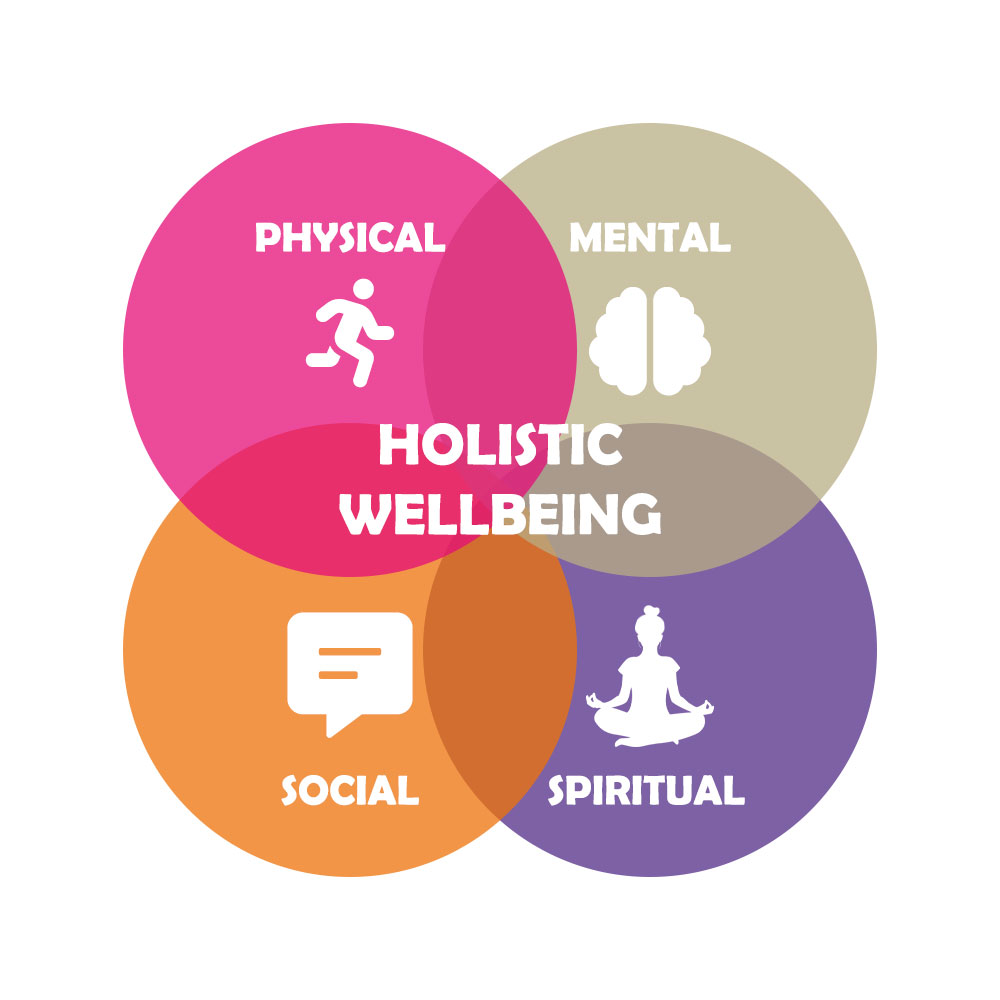
A holistic approach means to provide support that looks at the whole person. Physical, Mental, Social and Spiritual support. Each person will have a different experience of wellbeing and achieving optimal “holistic” health. It is influenced by age, gender, culture, heritage, language, faith, sexual and gender identity, relationship status, life experience and beliefs. Nonetheless to be holistic it absolutely must focus on both BODY and MIND, so we include physical and mental health goals.
Physical Health Goals
Physical health goals are on the most type of goal, the most common outcome goals are: To lose weight, to eat healthier, be stronger – these are all associated with physical health However, most people only write superordinate physical health goals. The general end goal and maybe the desired state / outcome goal! Perhaps a healthier body or to be in general better physical shape. What you need now is the specifics…
But how will you achieve this?
This could be exercising a set number of times a week realistic to your goals, or to eat foods contributing to your weight loss goals, such as your 5 portions of seasonal veg a day and keeping hydrated with 1.8 and 2 litres of water per day (about 6-8 glasses). This is your final part of the subordinate goal stage, to keep you on track day to day.
Mental Health Goals
What are mental health goals? They are equally as important as your physical goals, and they linked to self-care and allowing your mind to relax, de-stress, reduce anxiety and instil calm.
Like your physical goals, mental goals should be measured with realistic and achievable goals using the hierarchy system described above – with the superordinate and subordinate goal approach.
For example, if your superordinate goal is to “be healthy”, then this is just the broad goal and not specifically giving you know how or motivation to achieve this. This is where your intermediate and subordinate goals come into play. So, your intermediate goal could be, get enough sleep. Then your subordinate goals maybe… keep a health journal; no screen time after 8p.m, trying a breathing exercise before bedtime as part of a new sleep hygiene routine.
Creating goals using a tier system allows them to be more measurable and specific to you, to give you chance to up to date with them and how to track results much easier. Refer to SMART goal setting in this months Tonic and Me topic – MOTIVATION.
Also note here how the overall goal to be more healthy requires BOTH mental and physical health goals.
We really hope this helps you in your new year goal setting. If you are interested in some theory behind goal-setting, here is a great article Read more here.
If you are still unsure of where to start in terms of new year mental and physical health goals please contact us to enquire about our 1-2-1 coaching and group workshops – we have online and onsite options available with the Tonic Team.


